Why Crude Is Staying Expensive Even as Gulf Shipments Rebound

Industry overview
Oil is getting more expensive even though the Persian Gulf is shipping more of it than it did before the Iran war started. Ship-tracking firm Kpler, cited by The Wall Street Journal last week, found Middle East oil flows averaged more than 24 million barrels a day in the week through Oct. 18, above the prewar level of 23.3 million barrels a day. Yet Brent crude jumped to a six-month high on Friday, settling at $116.72 a barrel for its third straight weekly gain, while West Texas Intermediate moved past $100 to close at $103.27. Both were only slightly lower as of Monday.
Investor Louis Navellier, editor of Growth Investor, highlighted the mismatch in his Flash Alert last Thursday, noting that energy prices stayed firm even though more vessels are passing through the Strait of Hormuz than before the war began, and that the Gulf is exporting more oil than it did before the conflict.
Navellier traces the high prices first to the Houthis, the Iran-backed rebel group in Yemen, which has stepped up attacks on Saudi Arabia. In recent weeks, Houthi missiles and drones have hit Saudi oil facilities and repeatedly struck Riyadh’s main international airport, where an Oct. 10 strike killed 12 people and wounded more than 300. Brent reached a then-five-month high last Thursday after another round of Houthi attacks inside the kingdom. Navellier’s view is blunt: “So, as long as that’s going on, oil’s going to remain high.”
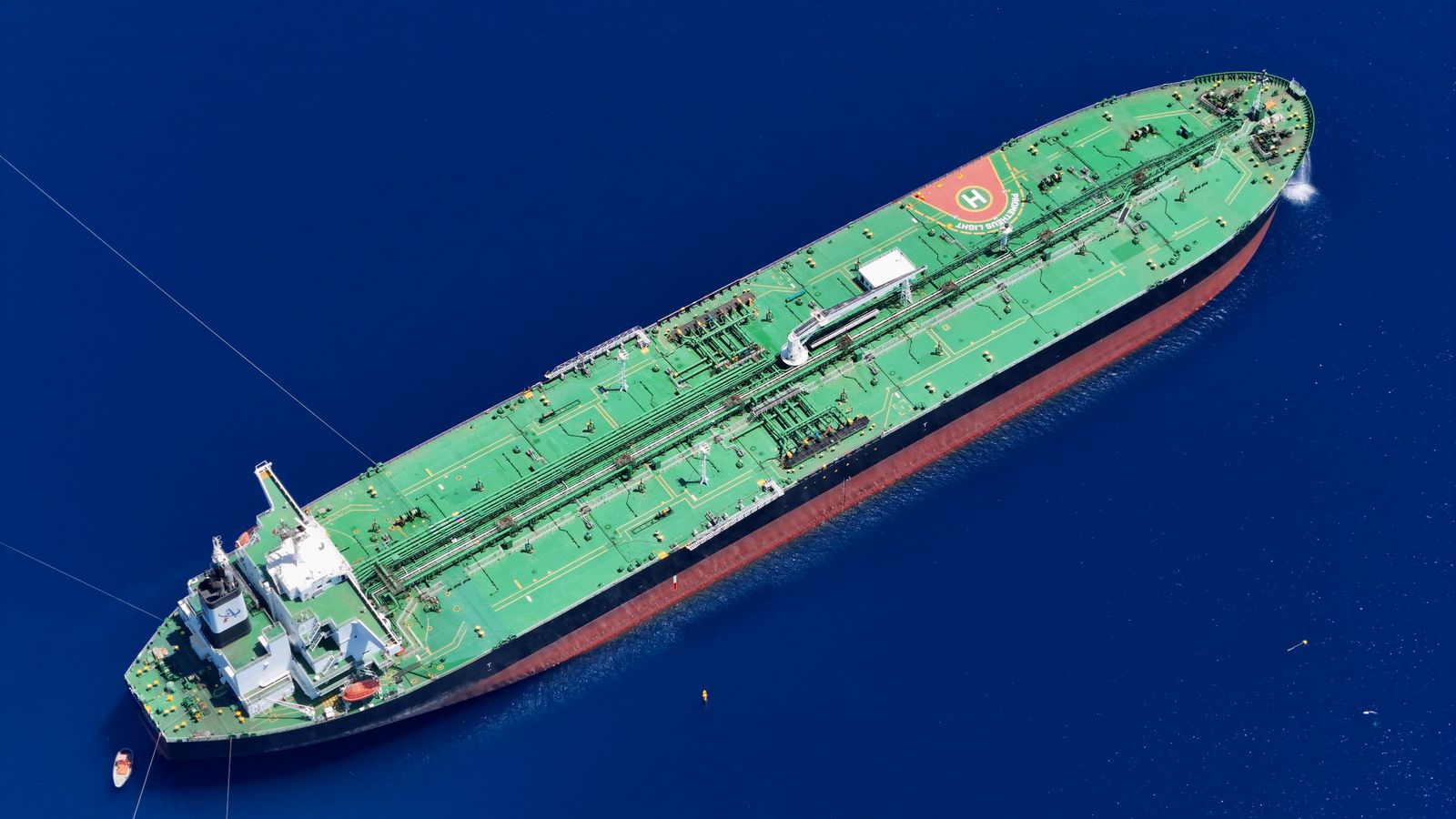
The second factor is the cost of moving the oil. Iran can no longer stop the tankers, but it can make each voyage dangerous and expensive. The Journal counted about 30 attacks on ships around the strait this month alone. War-risk insurance has risen to as much as 10% of a vessel’s value, up from less than 3%, and freight for a supertanker carrying Gulf crude to China reached a near-record $37.37 a barrel. JPMorgan’s head of global commodities strategy, Natasha Kaneva, summed it up for the Journal: “In April, the problem was a shortage of crude. In October, it is the cost of moving it.”
A political wildcard also hangs over the market. The Financial Times reports that a planned Israeli offensive on Iran is on hold until after the Nov. 3 midterm elections, and JPMorgan’s trading desk pointed to renewed Iran risk after the election as one reason last Thursday became such a rough day for much of the AI trade.
That same Thursday showed why Navellier keeps arguing for energy. After Meta (META) reported earnings that revived worries about the cost of the AI buildout, its shares fell about 7% and the Nasdaq dropped 2.6%, its worst day since early June, while oil climbed to that five-month high. Navellier told readers: “All my top stocks right now are energy. Shipping, refining – those are the top stocks, and we own a lot of them.” He added, “So, you need to have the energy stocks because they zig when the tech stocks zag, and that’s my main message.”
Energy has rewarded investors this year. As of Monday, the Energy Select Sector SPDR Fund (XLE) was up about 58%, well ahead of the Technology Select Sector SPDR Fund (XLK) at 29% and the S&P’s 12% gain.
Two parts of the oil patch stand out. In shipping, supertanker day rates on the Middle East-to-Asia route have soared from roughly $30,000 at the start of the year to $1.3 million, as noted in the Oct. 13 Digest. Okeanis Eco Tankers Corp. (ECO), one of Navellier’s favorites, is up 86% since he added it to his Accelerated Profits Buy List on June 22. In refining, HF Sinclair Corp. (DINO), profiled on Sept. 23, is a pure-play refiner benefiting from the global diesel shortage; diesel still averages about $6.18 a gallon, near its record high of $6.53 set in late September. Navellier argues the shortage will not ease soon: “You just can’t bomb the Russian refineries. You can’t attack the Saudi Arabian refineries and expect that diesel prices are going to drop. There is a supply chain problem.” Growth Investor subscribers are up 92% in DINO in about four months.
The same high oil prices are now a headache for the Federal Reserve, which announces its latest rate decision this Wednesday, followed the next morning by the September Personal Consumption Expenditures (PCE) report. Central banks normally “look through” an oil spike, treating it as a one-time shock rather than lasting inflation, but that only works if the answer to three questions is “no.”
First, will high prices last? The futures market increasingly says yes: oil for delivery in January 2027 has climbed 17% since early September to more than $97 a barrel, according to Axios. Global inventories were drained during the war and countries need to refill stockpiles, putting a floor under prices. Navellier said a couple of weeks ago, “So, crude oil prices aren’t likely to fall below $90 per barrel.” That floor has held with room to spare: Brent has not closed below $100 all month.
Second, is energy spreading into everything else? Early signs point that way. September’s core CPI, which strips out food and energy, rose 0.3%, above the 0.2% economists expected, and airfares, the clearest example of fuel costs bleeding into core prices, are up 22.4% from a year ago, with many airlines’ cheaper fuel hedges nearing expiration. Diesel is another channel: KPMG calls it “the sleeper threat” because it raises the cost of moving nearly everything, with a lag.
Third, are Americans starting to expect higher inflation? The University of Michigan’s latest survey shows long-run inflation expectations rising to 3.5%, well above their 2024 range of 2.8% to 3.2%. Inflation has now run above the Fed’s 2% target for nearly six years, leaving the Fed with little credibility for calling this spike temporary.
Taken together, that is why markets expect the Fed to hold on Wednesday but hike in December. The CME FedWatch Tool puts the odds of a hike this week at 9.4%, and the odds of at least a quarter-point raise in December at 81.5%. Navellier noted, “The one positive is that the Fed doesn’t like to raise interest rates ahead of an election.” The midterm elections fall on Tuesday, November 3, one week after the October FOMC meeting, so the Fed will most likely wait until December to hike again. Fed Chair Kevin Warsh rarely tips his hand, so his post-meeting press conference will be watched for hints on those three questions. On Thursday, the headline PCE number will reflect higher gasoline prices; the figure to watch is core PCE, which Wall Street expects at about 3.1%.
The irony is that the same stubborn energy prices troubling the Fed are the reason energy deserves a place in a portfolio, and one corner of the sector can win either way. If the fear premium fades, oil could pull back; if the futures market is right, prices stay high. Either way, the companies that get paid to move oil can profit. Before the Iran war, only about 17% of non-Iranian crude leaving the Gulf bypassed Hormuz entirely, via pipelines across Saudi Arabia and the UAE; Kpler puts that share at about 40% in September. The lesson for energy buyers is to avoid depending on a single chokepoint, and that shift is a boost for American energy: the U.S. Energy Information Administration says the Hormuz disruption helped double U.S. LNG shipments to Asia in the first half of 2026, and overall U.S. LNG exports topped 73 million tonnes in the first seven months of the year, up 23% from a year earlier.
Navellier believes the U.S. is becoming the place the rest of the world must come to for energy; he calls it “America’s IPO.” His favorite way to play it is the “toll roads”: four pipeline and infrastructure companies that collect fees as American energy flows to data centers, Gulf Coast export terminals and customers overseas, with fees depending largely on how much energy moves rather than what it sells for. He lays out the full story, including his toll-road picks, in a new free presentation.
Industry overview based on InvestorPlace
What it means for investors
The lesson for investors is that energy is working as a hedge right now, not just as a trade. When Meta’s earnings sent the Nasdaq down 2.6% in a single session, oil jumped, and the year-to-date scoreboard backs it up, with XLE up about 58% against 29% for XLK and 12% for the S&P. That makes a case for holding energy alongside tech rather than choosing between them. Within energy, the article points to two very different risk profiles: shipping and refining have delivered spectacular gains, with ECO up 86% since June 22 and DINO up 92% in about four months, but both depend on the war premium lasting, so a ceasefire or a drop in attacks could unwind them quickly. The pipeline “toll roads” are the steadier alternative, since their fees track volumes moved rather than the oil price. The other thing to watch is the Fed: with markets pricing an 81.5% chance of a December hike, rate-sensitive stocks could face a second headwind if core PCE comes in above the expected 3.1% on Thursday. Investors should treat the December meeting, not this week’s, as the decision that matters.
What it means for employees
For workers, the energy boom cuts both ways. Crews in shipping, refining and U.S. LNG export are in demand while day rates and diesel margins run hot, which supports jobs and overtime across the Gulf Coast and in American energy infrastructure. But the same attacks driving the rally put seafarers transiting the Strait of Hormuz and staff at Saudi oil facilities and airports in real danger: the Oct. 10 airport strike killed 12 people and wounded more than 300. Airline employees face the other side of the coin: as cheaper fuel hedges expire and fares rise 22.4% year over year, carriers may squeeze costs elsewhere. And if the Fed does hike in December, higher borrowing costs would eventually cool hiring across rate-sensitive industries.
What it means for customers
Customers are already paying for this rally. Gasoline prices feed straight into the PCE report due Thursday, diesel is averaging about $6.18 a gallon, near its record $6.53, which pushes up the cost of moving nearly everything, and airfares are up 22.4% from a year ago as airlines pass fuel costs through. The risk is that these costs keep spreading: September’s core CPI already came in above expectations at 0.3%, and KPMG’s warning that diesel is “the sleeper threat” suggests household budgets will feel it with a lag even after pump prices stabilize.
Note: Investment calculations and projections are for illustrative purposes only. Market conditions change frequently. Consult a qualified financial advisor before making investment decisions.