
Why experts say rethink labels

When Bryanna Hambrick bought a three-bedroom, two-bathroom single-family home in Columbus, Ohio, in 2022, she hoped that life milestone would help her save money on rent and build wealth.
“Society puts a lot of pressure on you to have property, get married, have kids,” said the 35-year-old. “Life wasn’t giving me those other things, so I was like, well, I can buy a home. I can control that.”
But her purchase came with a monthly payment of nearly $1,200, about $200 more than expected, after a property tax reassessment and a higher-than-anticipated interest rate on her mortgage. Much of her savings went toward closing costs, Hambrick said, while expensive and unexpected home repairs have kept her living paycheck to paycheck in the years since.
“Anytime I’ve gotten a certain dollar amount in my savings that makes me feel a little bit more comfortable, something happens,” Hambrick said.
Hambrick’s experience highlights what experts say is a broader problem: Even debt that seems like a sound investment can become a financial burden.

Mortgages and student loans are often called “good debt” because they may help borrowers build wealth or increase their earning power. “Bad debt,” by contrast, often includes credit card balances as well as auto and personal loans, because they often finance consumption or assets that can lose value.
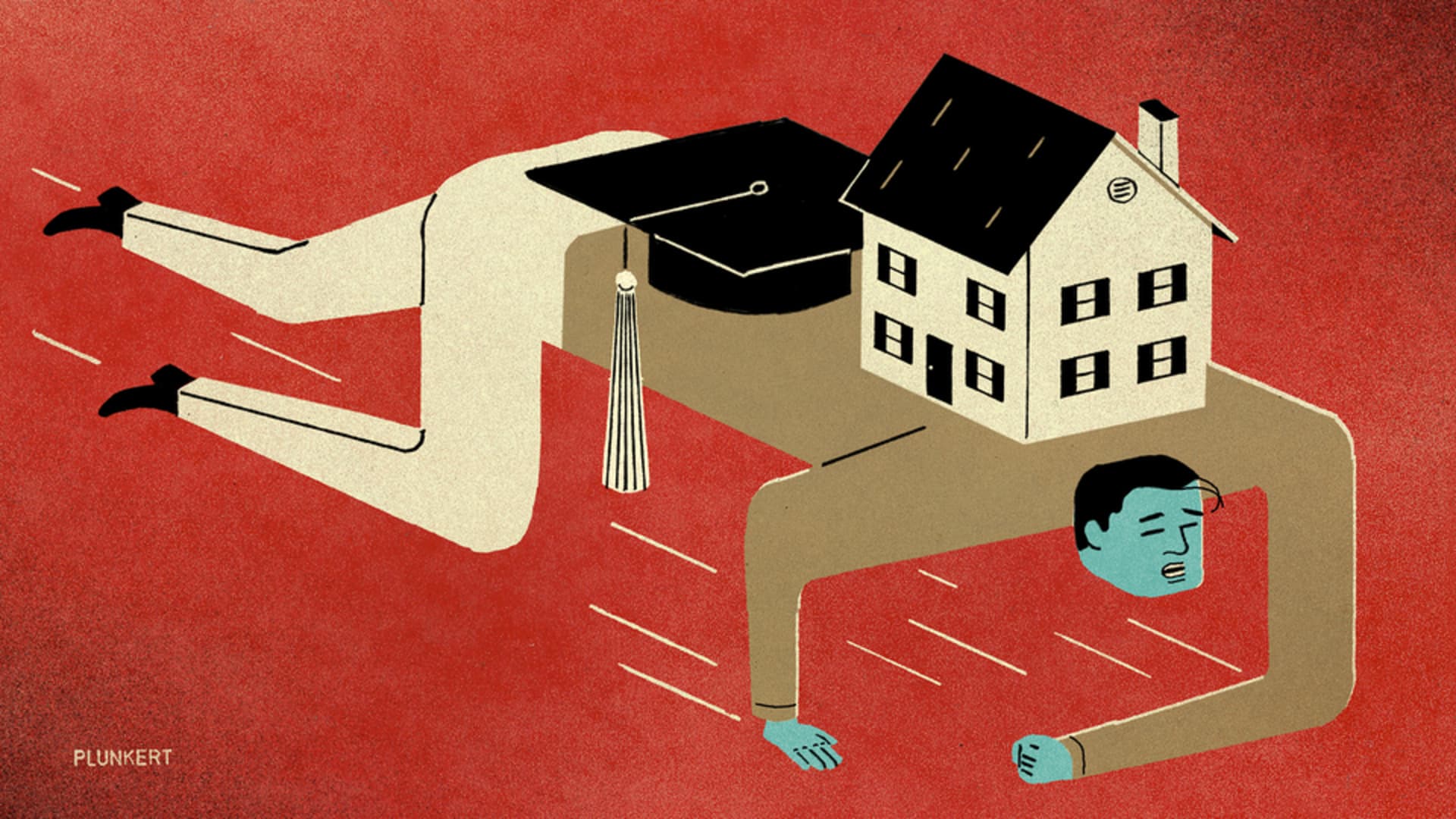
But financial experts say the “good debt” label can downplay the risk for borrowers and lead them to overextend themselves, making repayment challenging.
“I try to avoid talking about ‘good debt’ now,” said Sheila Bair, an author and advisor who chaired the Federal Deposit Insurance Corporation from 2006 to 2011. “I think your presumption should always be against debt … it’s a burden on your financial future, and there are a lot of ways it’s marketed that make it look like it’s not.”
Look beyond the ‘good debt’ label
Even if a purchase seems to check all the boxes, you need to consider the long term. “Young people shouldn’t feel pressured to buy a home or borrow to go to college,” said Bair, a member of the CNBC Global Financial Wellness Advisory Board and former president of Washington College. “It’s a decision that needs to make sense for you financially, and for some people, it won’t.”
She recommends asking yourself whether taking on debt will improve your financial well-being. Then dig into the details.
For example, whether a mortgage is financially sound depends on factors including the home price, loan terms, and the borrower’s income stability and financial reserves.
Experts say you should do your own calculations to figure out how much mortgage payment you feel comfortable with. Don’t expect lenders to tell you how much house you can afford; mortgage companies consider what you can repay, not what’s in your budget.
“Make sure your mortgage is affordable before you do anything else, and make sure you’re going to be there for many years, because home prices over time will appreciate in value, but they go up and down,” said Bair. She recommends planning to live in the home for at least five years to account for transaction costs and the possibility of short-term price declines.
The housing crash that precipitated the 2008 financial crisis shows how debt commonly viewed as “good” can go bad. Average U.S. home prices rose sharply between 1998 and 2006 as mortgage lending expanded, including to borrowers with weaker credit. Some borrowers took on large mortgages, betting that home values would keep rising.
“A lot of the folks that had those subprime mortgages didn’t understand what they were getting,” said Bair.
When home prices fell and payments rose on some adjustable-rate mortgages, foreclosures surged. There were about 3.8 million foreclosures between 2007 and 2010, according to an analysis by the Federal Reserve Bank of Chicago.
Why even ‘good’ debt can become a mistake
Beyond the fundamentals such as interest rates and repayment terms, borrowers should examine their motivations and expectations before taking on debt, said Brad Klontz, a financial psychologist and certified financial planner.
Many people get tripped up by impulse borrowing, tying self-worth to big purchases, and too-rosy expectations about future earnings, he said.
“We have some chronic debt mistakes that we’re all vulnerable to,” said Klontz, who is a member of the CNBC Financial Advisor Council and the CNBC Global Financial Wellness Advisory Board.
He recommends people approach debt as a business decision — and temper their expectations. If, say, buying a home or getting a master’s degree has the potential to generate wealth, don’t automatically assume it will; consider the risk and return on that investment, he said.
Make sure your assumptions aren’t overly optimistic. For example, when considering education spending, research potential careers and salaries in the government’s Occupational Outlook Handbook. Then work backward and ask: “Does it make sense for me to take on student loan debt to get a degree? Do you even need a degree?” Klontz said.
Avoid emotional borrowing to fund a lifestyle, impress others, or pay for short-term experiences, said Klontz.
“If you’re taking on debt to travel, that is a financial mistake,” Klontz said. Instead, he suggests planning and saving for travel experiences. “A lot of times, when people are overspending or taking on debt for a vacation, it’s somewhat of an impulse purchase.” That can lead to long-term regret, he said, “because you’re having that emotional experience, and then you come back home to reality, and now you’re stuck with the chronic stress of trying to pay that off.”
Klontz said one of the biggest mistakes he sees people make is buying the “absolute biggest, best house [they] can possibly afford.”
“Even people who are really wise with money fall into that mistake,” Klontz said. They may overestimate their ability to make more money in the future and underestimate how much they will spend on repairs and maintenance, he said.
Bryanna Hambrick after buying her first home.
Courtesy: Bryanna Hambrick
Hambrick said she wishes she had focused more on the cost of the home than the hardwood floors and granite countertops. “Your first house doesn’t have to be your forever home,” she said.
Hambrick’s home value has appreciated, but not as much as she expected. “It feels like bad debt, bad decision overall,” she said.
— CNBC’s Nathaniel Lee contributed reporting.