These Four Stocks Could Do What Cisco Did in 2000

In March of 2000, Cisco Systems Inc. (CSCO) briefly became the most valuable company in the world.
Not Walmart Inc. (WMT). Not General Electric Co. (GE). Not Exxon Mobil Corp. (XOM).
At the time, a lot of people thought that was absurd. After all, Cisco wasn’t a consumer brand. It didn’t make cars. It didn’t drill for oil. Most people couldn’t have told you exactly what the company did.
But Wall Street understood something important.
The internet was changing everything.
Businesses were wiring offices. Telecom companies were laying fiber. Data traffic was exploding. Every company wanted to connect employees, customers, suppliers and partners to this new digital world.
Cisco wasn’t selling the internet itself.
It was selling the infrastructure that made the internet possible.
Today, when people look back on that period, they usually focus on the crash. They remember Pets.com. They remember the speculation. They remember all the companies that disappeared.
What they forget is that the infrastructure buildout was real. Fiber got laid, networks got built and servers got installed.
And investors who understood that trend made a tremendous amount of money.
I’ve been thinking about Cisco lately because we’re living through another tech infrastructure boom.
Not identical. History never repeats exactly. But in my nearly five decades of investing, I have learned that major technological shifts tend to rhyme.
In fact, one company in particular keeps coming to mind.
Most investors still think of Micron Technology Inc. (MU) as a cyclical memory-chip company from Boise, Idaho. Yet today, Wall Street is searching for the next great AI leader after NVIDIA Corporation (NVDA) – and Micron is at the center of the conversation.
Sales are expected to grow more than 250%. Earnings are expected to rise more than 900%.
Those aren’t normal numbers. That’s what happens when a major technological shift is underway and demand overwhelms supply. And it’s where the fundamentally superior companies start to separate themselves from the pack.
In fact, Micron joined the trillion-dollar market-cap club last Tuesday, May 26, because demand for advanced AI memory has become one of the biggest bottlenecks in the entire AI ecosystem. The company has reportedly sold out much of its high-bandwidth memory production under long-term contracts, and analysts expect supply shortages to persist for years.
That’s why I want you to ignore all the doom-and-gloom forecasts you hear every day.
The stock market has a very good foundation under it. First-quarter S&P 500 earnings grew nearly 29% from a year ago – more than double what analysts expected coming into the quarter. Analysts continue revising estimates higher, and many AI-related companies have seen earnings forecasts jump dramatically over the past year.
The AI buildout is real.
And the spending behind it is staggering.
Microsoft Corp. (MSFT), Amazon.com Inc. (AMZN), Alphabet Inc. (GOOG) and Meta Platforms Inc. (META) are expected to spend roughly $700 billion on AI infrastructure this year alone. That’s data centers, networking equipment, chips, power generation and everything needed to support the next generation of AI applications.
Those aren’t startup projections.
Those are some of the largest and most successful companies in the world committing enormous amounts of capital because they believe AI will reshape the global economy.
That’s what I want to talk about today.
More importantly, I want to explain why I think many investors are focusing on the wrong thing.
I’ll show you four stocks that are prospering from the AI buildout beyond NVIDIA and Micron… why I believe the AI boom is broadening into one of the biggest infrastructure spending waves I’ve ever seen…
And why I’m teaming up with one of the best AI developers in this business to discuss a new way investors can stay bullish without getting blindsided by volatility.
Everybody Wants the Next NVIDIA
I’ve been investing through major technology shifts for nearly five decades.
I was using computers to analyze stocks in the 1970s, long before it became common on Wall Street. Over the years, my quantitative systems helped identify winning stocks such as Apple Inc. (AAPL) and Nike Inc. (NKE) – and NVIDIA and Microsoft – long before they became household names.
One thing I’ve learned is that investors are always looking for the next leader.
In the late 1990s, everybody wanted the next internet stock.
Today, everybody wants the next AI stock.
That’s understandable. NVIDIA has become one of the most successful investments in modern market history.
But investors often become so focused on one company that they miss the broader trend unfolding around it.
Artificial intelligence is no longer just a NVIDIA story.
There are a lot more AI-related stocks prospering now.
Memory companies are benefiting. Networking companies are benefiting. Construction companies are benefiting. Data-center companies are benefiting. Even power-generation companies are benefiting (we used to call those “utilities”).
Why?
Because AI requires an enormous amount of infrastructure.
The average investor sees ChatGPT or Claude on their browser and thinks software.
I see hundreds of billions of dollars flowing into an entirely new computing architecture.
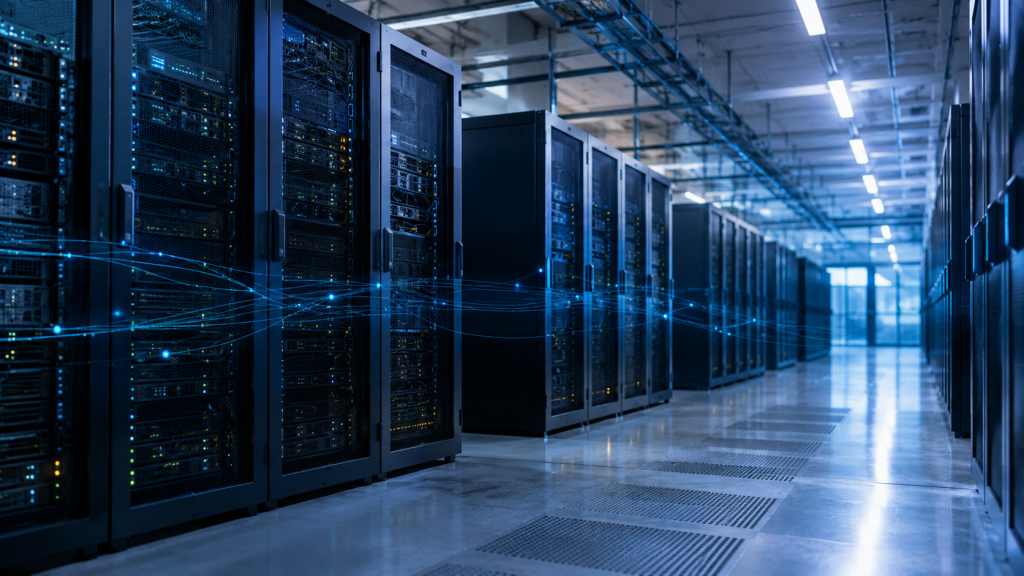
To appreciate the scale, one proposed AI data-center project in Utah would cover nearly three times the area of Manhattan. Meta is building a massive AI campus in Louisiana, and similar projects are being planned across the country.
These facilities will require thousands upon thousands of chips, servers and networking systems.
That’s why companies like Micron have become so important.
It’s also why I want you to pay attention to companies like Dell Technologies Inc. (DELL), Hewlett Packard Enterprise Co. (HPE), Ciena Corp. (CIEN)… and, yes, Cisco. These aren’t the first names investors think about when they hear “AI,” but they’re increasingly prospering from the buildout.
The opportunity is getting bigger. Not smaller.
When a major investment theme spreads beyond a handful of stocks and starts lifting entire industries, it usually means the trend is becoming more durable and more profitable – not less.
That’s what we’re seeing right now.
The Real Risk Isn’t What Most Investors Think
I focus on a combination of fundamental and quantitative measures– sales growth, earnings growth, analyst revisions, institutional buying pressure. That’s how my Stock Grader system has identified winning stocks for well over 40 years.
And right now, those indicators continue to point in the right direction. I think many of the best AI and data-center stocks still have substantial upside ahead of them before the year is over.
But being bullish doesn’t mean being complacent.
The biggest risk facing investors right now isn’t that AI suddenly becomes less popular. It’s not that companies stop spending on data centers. And it’s not that earnings suddenly collapse.
The bigger risk is that investors get shaken out of fundamentally superior stocks during perfectly normal periods of volatility.
I’ve seen it happen throughout my career. A stock pulls back. The headlines get scary. Investors become nervous. They sell.
Six months later, the stock is substantially higher.
The late 1990s were full of those moments.
Even the biggest winners experienced sharp pullbacks from time to time. Investors who stayed focused on the long-term trend were rewarded. Investors who reacted emotionally often weren’t.
I think we’re approaching a similar period now.
The market remains healthy, but summer can get bumpy. Trading volume thins out. Volatility increases. Short sellers become more aggressive.
That’s normal.
And it’s one reason I’ve been spending so much time with Keith Kaplan and the team at TradeSmith.
Over the past year, Keith and I have been exploring a new AI-enhanced approach that combines my stock-selection system with TradeSmith’s pattern-recognition technology.
What interested me wasn’t the technology itself. It was the results.
More importantly, it showed how investors can stay with opportunities like Dell, HPE, Ciena and Cisco when volatility inevitably shows up.
Because the hard part isn’t finding promising AI stocks anymore. The trend is staring us in the face.
The hard part is staying invested when the headlines turn negative and investors start questioning the same companies they loved a month earlier.
That’s exactly what Keith and I will be discussing on June 10 at a free event. We’ll show investors how we’re using AI to become more tactical without losing sight of the bigger opportunity, and you can register for that event right now.
Twenty-six years ago, Cisco became the most valuable company in the world because of the internet buildout. Last week, Micron became Boise’s first trillion-dollar company because of the AI buildout.
Whether it’s Micron, Dell, HPE, Ciena, Cisco – or another company prospering from the AI buildout – the opportunity is still much bigger than most investors realize.
The challenge isn’t finding the trend. The challenge is staying with it.
Save your seat for our free event here.
Sincerely,
Louis Navellier
Editor, Market 360
The Editor hereby discloses that as of the date of this email, the Editor, directly or indirectly, owns the following securities that are the subject of the commentary, analysis, opinions, advice, or recommendations in, or which are otherwise mentioned in, the essay set forth below:
Ciena Corp. (CIEN), Cisco Systems Inc. (CSCO), Alphabet Inc. (GOOG), Micron Technology Inc. (MU), NVIDIA Corporation (NVDA) and Walmart Inc. (WMT)
The post These Four Stocks Could Do What Cisco Did in 2000 appeared first on InvestorPlace.