

Why the Next AI Winners May Be the Companies That Use It, Not Build It

Industry overview
In the summer of 1919, then-Lieutenant Colonel Dwight D. Eisenhower set out on a journey from Washington, DC, to San Francisco. Today, you could make that trip in about 45 hours of driving time, or about 4-5 days depending on how much you chose to drive each day. But Eisenhower wasn’t driving on modern highways. He was part of a military convoy attempting to cross the country on roads that were not always worthy of the name. Vehicles frequently broke down; the convoy broke and repaired dozens of wooden bridges and reported that nearly all roadways were unpaved from Illinois through Nevada. The trip took 56 days and left a lasting impression on the young officer.
It’s no surprise then that when Eisenhower became President, he championed the effort to build the Interstate Highway System.
That infrastructure buildout changed America. As it continued, goods began moving across the country faster and more efficiently. Businesses started reaching customers hundreds or even thousands of miles away. Entire industries grew around the new network of roads. Seventy years after Eisenhower signed the Federal-Aid Highway Act of 1956, the Interstate Highway System has generated more than $6 in economic activity for every dollar spent on construction, according to the American Society of Civil Engineers.
And a huge chunk of that wealth didn’t go to the companies building the highways. Major freight haulers such as FedEx (FDX) and UPS (UPS) were huge beneficiaries, and many major businesses generate substantial revenue by locating their operations along highways, including McDonald’s (MCD), Waffle House and Cracker Barrel. None of these companies built the infrastructure — but they capitalized on it, building huge businesses on top of it.
And we’re seeing something similar happening in America today. Companies like Microsoft (MSFT), Amazon (AMZN), Alphabet (GOOG) and Meta (META) have spent billions on AI infrastructure — data centers and countless computers — and Wall Street traders have rewarded these companies with extraordinary market gains. But are we forgetting the lessons about who grows rich from infrastructure buildouts? What if the biggest AI winners are not the companies building AI, but the ones applying it?
Those are the companies Eric Fry is looking for. Eric is an expert global macro investor, and he has seen this type of opportunity before. Back in 2000, investors were pouring billions into the companies building the internet. Telecommunications companies were laying millions of miles of fiber-optic cable. But while companies like Cisco and Corning were soaring, Eric recognized something most investors missed. One of the companies he found was Humana (HUM), the health insurance company. Its stock had fallen 59% from its previous high. But behind the scenes, Humana was using the internet to transform its business. Wall Street was largely ignoring it, but Eric wasn’t. He recommended Humana to his readers. Over the next five years, the stock gained more than 350%.
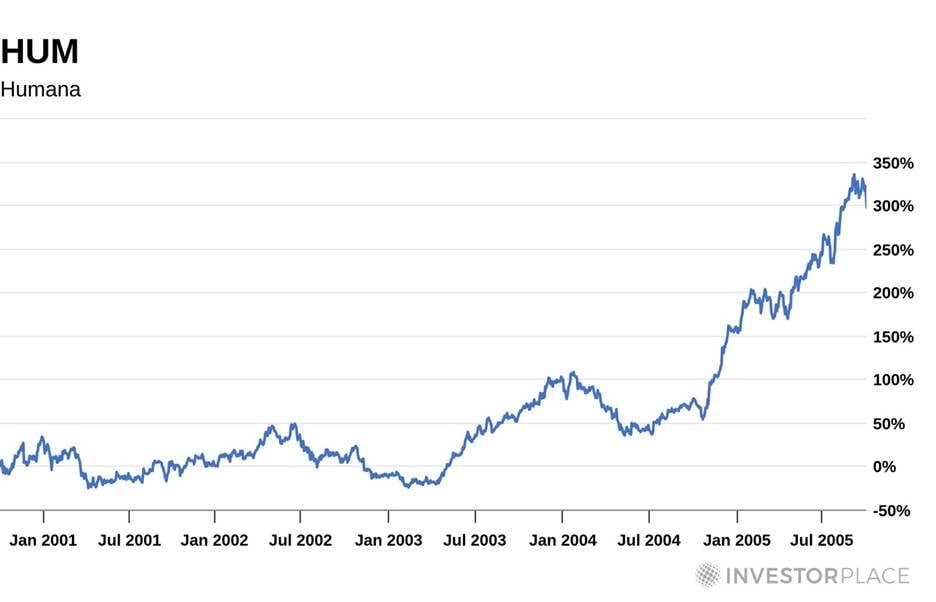
Meanwhile, Cisco (CSCO), one of the great infrastructure stocks of the era, collapsed nearly 90%. Eric didn’t predict the end of the internet. But he did recognize that the next great winners would be the companies using it, not building it. And now he believes history is about to repeat itself with AI. He calls the turning point “The Separation Phase” — when the companies that built the infrastructure begin to lose their advantage and a new group gains. He calls these companies “AI Appliers.” They’re not necessarily technology companies. In fact, some of them operate in industries you wouldn’t expect. But they’re using AI to transform their businesses, cut costs and potentially generate extraordinary profits. Eric believes some of these overlooked companies could double in value over the next 12 months. More importantly, he believes the shift could begin as soon as November 4 — the morning after the midterms. He’s recorded a new presentation explaining what he sees coming, including how his Apogee system is identifying these opportunities, and he names a stock in a free AI briefing.
Industry overview based on InvestorPlace
What it means for investors
For investors, the highway story is a warning against paying up only for the builders. The companies that laid the roads did not capture most of the $6 of economic activity generated for every $1 spent on the Interstate Highway System — freight haulers such as FedEx and UPS did, along with businesses that set up along the highways. The internet repeated the pattern: Humana gained more than 350% over five years after Eric Fry recommended it, while Cisco collapsed nearly 90%. Today the builders are Microsoft, Amazon, Alphabet and Meta, which have spent billions on AI infrastructure and been rewarded by the market. Fry’s case is that the next gains belong to the Appliers, and that some overlooked companies could double in value over the next 12 months. The catch is that the November 4 turning point is his forecast, not a fact, and this article does not name the Applier he favors — that comes in his free briefing.
What it means for employees
This story has no direct employee angle: it does not report hiring, layoffs or pay changes at any company. Indirectly, the highway parallel cuts both ways for work. The Interstate system created new kinds of jobs — in freight, logistics and the roadside businesses that grew up along it — even as it changed older ways of working. If AI Appliers follow the same pattern, the jobs that grow may sit inside ordinary companies in unexpected industries, as AI changes how their work gets done. But the same cost-cutting AI that makes an Applier attractive to investors can also put pressure on roles it replaces, so the effect on any one workforce is far from settled.
What it means for customers
For customers, the highway parallel is the most concrete part of the story. Once the roads existed, goods moved across the country faster and more efficiently, and businesses could reach customers hundreds or even thousands of miles away. The companies that applied the new infrastructure — the freight haulers and the roadside chains — are the ones that shaped what customers could buy and where. If AI Appliers play the same role, customers could see faster service, lower costs and new offerings from companies they would never think of as AI companies. The article does not name specific consumer benefits, though, and the Appliers it points to have yet to be revealed.
Luis Hernandez, Editor in Chief, InvestorPlace
Note: Investment calculations and projections are for illustrative purposes only. Market conditions change frequently. Consult a qualified financial advisor before making investment decisions.