
PCE Inflation and GDP Put Treasury Investors on Edge Before Thanksgiving
1. Takeaway: Two major economic reports could reset the rate debate
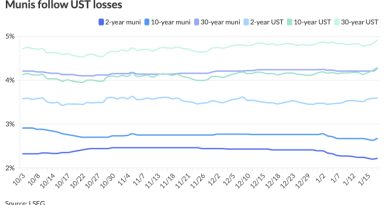
The October Personal Consumption Expenditures price index (PCE inflation) and the second estimate of third-quarter gross domestic product (GDP) are scheduled for release at 8:30 a.m. ET on Wednesday, November 25, according to the Bureau of Economic Analysis. The releases were still pending at the 7:00 a.m. ET cutoff. The Federal Reserve’s November 24 H.15 release showed the 2-year Treasury yield at 4.63% and the 10-year yield at 4.92% on Monday, November 23. Tuesday’s 5-year note auction then produced a high yield of 4.719% on $70 billion in securities, with a bid-to-cover ratio of 2.37, according to auction-data trackers reporting Treasury results.
The central question is whether inflation and economic growth are moving in a direction that supports a change in expectations for Federal Reserve policy, or whether they confirm that borrowing costs are likely to remain elevated.
2. What happened? The latest yield data show a market still weighing policy risk
The Federal Reserve’s H.15 release dated November 24 contained Treasury constant-maturity yields through November 23. It showed the 2-year yield at 4.63%, the 5-year at 4.74% and the 10-year at 4.92% for that session. These are daily benchmark yields, not Tuesday’s intraday prices.
The short end of the curve is especially sensitive to expectations for Federal Reserve policy. If inflation remains elevated, the Federal Reserve may keep its policy rate higher for longer. If inflation cools, the market may expect earlier rate cuts. The latest yields suggest that investors are not yet confident about either outcome.
The market has recently been volatile because investors are reassessing both the outlook for inflation and the financial returns expected from large technology and artificial-intelligence investments. That matters for bonds because a shift in risk appetite can change demand for Treasuries, while inflation expectations can change the yield investors require.
3. The key numbers
- 8:30 a.m. ET: Scheduled release time for October PCE inflation, personal income and outlays, and the second estimate of third-quarter GDP.
- 4.63%: Official 2-year Treasury constant-maturity yield on November 23, the latest date shown in the Federal Reserve’s H.15 release.
- 4.74%: Official 5-year Treasury yield on November 23.
- 4.92%: Official 10-year Treasury yield on November 23.
- $70 billion: Amount of 5-year notes sold at the November 24 auction, according to auction trackers citing Treasury results.
- 4.719%: High yield at that auction, according to the same trackers.
- 2.37: Bid-to-cover ratio at the November 24 5-year auction.
- 1:00 p.m. ET: Scheduled release time for the Federal Reserve’s Beige Book today, according to the market calendar.
A basis point is one-hundredth of a percentage point. The auction yield is not the same thing as the market yield after the sale. The auction measures the yield required to sell the new notes at one point in time, while the secondary market continues to move.
4. The auction showed participation, but not an unambiguous demand signal
The Treasury sold $70 billion of 5-year notes on Tuesday at a high yield of 4.719%. The bid-to-cover ratio was 2.37, meaning submitted bids amounted to 2.37 times the securities offered. That ratio was above the six-auction average of 2.31 cited by TFTC’s auction tracker. However, indirect bidders received 54.3% of the competitive awards, below the tracker’s reported recent average of 61.9%. Primary dealers took 9.0%.
These measures should be read together. A bid-to-cover ratio above the recent average can suggest adequate overall participation, but it does not necessarily mean that all investor groups showed stronger demand. Indirect bidders include investors submitting through intermediaries, among them foreign official institutions. Direct bidders and primary dealers are other important parts of the auction distribution.
The result is not a simple “strong” or “weak” verdict. It shows that the Treasury placed the issue, while the bidder mix was less favorable than the recent indirect-bidder average. Investors should also compare the auction yield with the when-issued market yield immediately before the sale to assess whether the Treasury had to offer extra compensation. The auction tailed by 0.3 basis points against the 4.716% when-issued yield.
5. Why PCE inflation matters more than one auction
The PCE price index is the Federal Reserve’s preferred inflation measure. It tracks changes in prices paid by consumers for goods and services, and it is used by the central bank to assess whether inflation is moving toward its 2% target.
Treasury investors watch PCE because inflation affects the real return on fixed-income securities. If inflation is higher than expected, the real value of future interest and principal payments declines. That can push yields higher as investors demand greater compensation.
The report will also matter because the Federal Reserve’s December policy decision is approaching. Market participants will look for evidence about whether the central bank is likely to adjust its policy rate.
The distinction between headline and core inflation will be important. A decline in headline inflation driven by energy prices may have different implications from a decline in core inflation, which excludes food and energy. The core measure is often viewed as a better guide to underlying price pressures.
6. GDP can complicate the inflation interpretation
The second estimate of third-quarter GDP is also due at 8:30 a.m. ET. GDP measures the value of final goods and services produced in the economy. The second estimate incorporates additional source data and may revise the initial estimate.
A stronger GDP reading could suggest that economic activity remains resilient, which may give the Federal Reserve more room to keep rates higher. A weaker reading could suggest that growth is slowing, which may support expectations for rate cuts.
The composition of growth matters. Household consumption, business investment, government spending and net exports can move in different directions. A report driven by consumption may have different implications from one driven by inventory changes or government spending.
For bondholders, the combination of GDP and PCE is more informative than either report alone. Strong growth with elevated inflation could push yields higher. Weaker growth with cooling inflation could support lower yields.
7. What the market might be getting wrong
One interpretation is that a strong economy automatically means higher Treasury yields. That is incorrect. Yields also depend on inflation expectations, Federal Reserve policy, global demand for safe assets and the supply of Treasury securities.
Another interpretation is that any softer inflation reading will immediately trigger a Treasury rally. That is also too simple. The market may already expect softer inflation, and a modest improvement may not change the outlook for policy.
The auction also should not be treated as a definitive referendum on Treasury creditworthiness. The Treasury’s ability to sell securities depends on market conditions, investor demand and the yield offered, not on a single auction result.
8. What this means for investors, employees and borrowers
For bond investors, the main risk is that yields may move sharply as the market adjusts its expectations for inflation and Federal Reserve policy. A sudden change in yields can affect the value of existing bond holdings.
For investors holding bond funds, the fund’s net asset value can change as the market reprices its holdings. Longer-duration funds are generally more sensitive to yield changes than shorter-duration funds.
For businesses, higher borrowing costs can affect refinancing, expansion and investment plans. Companies that need to borrow may face higher interest expenses if yields remain elevated.
For households, Treasury yields are one input into mortgage and other borrowing rates, but mortgage rates also depend on other factors, including credit spreads and lender costs.
9. What to watch next
The first event is the 8:30 a.m. ET PCE and GDP release. Investors should compare the headline inflation reading with core inflation and the GDP growth rate with its composition.
The Federal Reserve’s Beige Book is scheduled for 1:00 p.m. ET. It summarizes business and economic conditions across the Federal Reserve districts and may provide additional context about the economy.
Thanksgiving closes U.S. markets on Thursday. Friday’s session is scheduled to end early, and the shortened week may reduce trading volume and liquidity.
10. Bottom line, sources and further reading
Wednesday’s PCE inflation and GDP releases are the central tests for Treasury investors before the Thanksgiving holiday. The reports will provide new information about inflation and growth, but they will not settle the debate about Federal Reserve policy on their own.
The key question is whether inflation is easing enough to change the Federal Reserve outlook without signaling a sharp slowdown in economic activity. Investors should watch the data and the market’s reaction, rather than treating one release as a definitive answer.
Sources and further reading
- BEA — GDP second estimate and Personal Income and Outlays release schedule, U.S. Bureau of Economic Analysis, November 25, 2026 schedule.
- Federal Reserve — H.15 Selected Interest Rates, Federal Reserve Board, November 24, 2026 release, data through November 23.
- Treasury 5-year auction results tracker, TFTC, November 24, 2026.
This article is for general informational and educational purposes only and is not financial advice or a personal investment recommendation. Market data can change quickly — check current figures before acting on anything you read here.