Kansas City may issue bonds to expand women’s soccer stadium


Bloomberg News
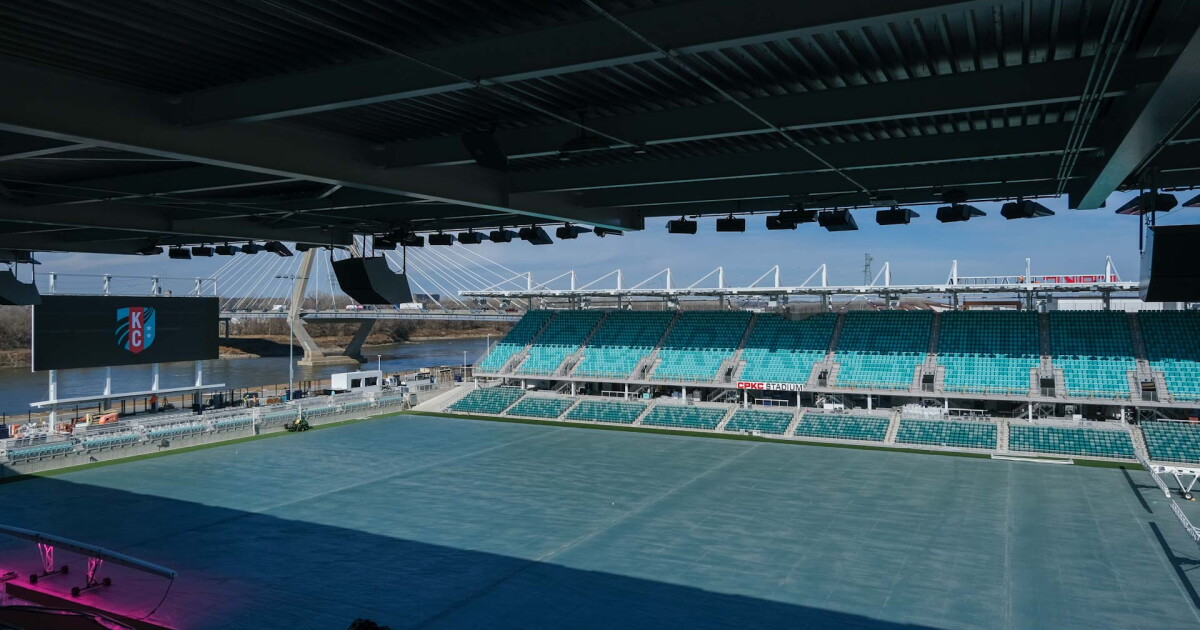
Kansas City, Missouri, may issue $235 million in special obligation bonds to help fund an expansion of the Kansas City Current’s two-year-old stadium.
Processing Content
The venue where the National Women’s Soccer League team plays its home games, CPKC Stadium, opened to the public in March 2024 overlooking
Megan Strickland, Lucas’ press secretary, said via email that city officials were “very busy with the World Cup” and were unable to respond by press time.
“This is just what Kansas City does. We just throw money at these projects,” said Patrick Tuohey, a senior fellow at the Show Me Institute and a resident of Kansas City.
“For the past few years, we’ve struggled with the Chiefs and the Royals,” he said. The NFL’s Kansas City Chiefs have announced
“The city is working on a package — they haven’t disclosed the details — to keep the Royals,” he said. “Now they introduce this effort to subsidize the Current. It just seems to be, we spend money because we spend money.”
In April 2024, voters in Jackson County, which includes Kansas City, Missouri, rejected a
Tuohey pointed to an interview Lucas did with
In the interview, Lucas also said, “I would love more open transparency from teams… When it is a public investment and what will likely be public lands, I do think that greater transparency is due.”
The team is co-owned by Chris and Angie Long of Palmer Square Capital Management, and Kansas City Chiefs quarterback Patrick Mahomes and his wife Brittany. CPKC won 10-year
Tuohey argued that if the Current are successful at selling tickets — the team
The ordinance introduced by Lucas states that City Council intends “to support good-faith negotiations with the Kansas City Current for the expansion of the team’s stadium in Kansas City,” and to back a tax increment financing plan for the project.
It directs the city manager to negotiate a term sheet and a development agreement with the team for the design and construction of an expanded stadium, parking garage, mixed-use development and supporting infrastructure in the Berkley Riverfront area.
It further instructs the city manager “to apply for various financial and tax incentives through state agencies and negotiate intergovernmental cooperative agreements with the State of Missouri.” And it authorizes the city manager to enter into a lease or exclusive license agreement with a community improvement district and/or Ballard Development, LLC, or an affiliate for the levee promenade, Lydia pump station and cafe zones.
City Manager Mario Vasquez did not respond to email or voicemail requests seeking comment.
The project is estimated to cost $1.4 billion total, according
The statement says the city “would issue bonds, supported by the Current ownership,” but city officials did not answer questions about the repayment terms on the bonds, nor did a spokesperson for the Current.
Adding mixed-use developments will not solve the public benefit issues that economists have raised around stadium financing, said Robert Baumann, professor of economics and accounting at College of the Holy Cross, who
“The problem is that the stadium cannibalizes a large portion of the spending and activity in its neighborhood,” Baumann said by email. “Most people don’t want to shop, eat or hike near a stadium because there are plenty of places to do that without a crowd and parking issues. And even if some spending occurs in the development area, it usually comes at the expense of spending not happening elsewhere.”
He stressed that economists have yet to find a case where the public gets a positive financial return on publicly funded stadiums. When tax revenues go to lower-income residents or businesses, the return on investment is typically higher, because those groups spend a higher share of their income in the community, he said. Subsidies that go to millionaire or billionaire sports team owners have “zero or negative returns for the public,” he said.
Current Vice President of Communications Dani Welniak responded to questions with a statement that said, “To date, we have made a generational investment in our city — investing over $350mm in Kansas City’s riverfront through our investments in CPKC Stadium and Current Landing.”
The statement called the Current Landing project “one of the most ambitious mixed-use projects in the United States,” and said, “We appreciate the collaboration and leadership from community and civic partners. We look forward to sharing more details as conversations with our civic partners continue.”
The city is also counting on additional investment from the state, according to the statement.
The city expects the project to bring in additional tax revenue, the statement said, and Lucas told
“This is the Ponzi scheme that cities get caught up in,” Tuohey said. “They don’t have the revenue now to support their needs. So they incentivize a big project, thinking that in 20 or 30 years… we will have all this additional money. And yet in 20 years, when that project comes onto the city rolls, all the infrastructure supporting it… needs to be updated.”
Tuohey pointed to the city’s current
“He knows the city is running a structural deficit; he knows that the needs of the city far outweigh its ability to generate revenue; and yet he does not stop diverting badly needed taxpayer revenue away to these projects,” Tuohey said. “We subsidize everything.”
The premise of TIF, Tuohey said, is that by lighting a spark in a blighted area, you create a virtuous cycle of self-sustaining development. “But the problem in Kansas City is that the next developer… says, ‘I want the same deal that the last guy got,'” he said.
Complicating matters further is that Missouri has relatively lax standards for the “but for” test required to establish a TIF district, Tuohey said.
“The ‘but for’ analysis in Missouri is often satisfied simply by a letter from your bank saying, ‘We won’t fund this without a subsidy,'” he said. “We not only blight out-of-use industrial areas, we blight greenfields in Missouri. The standards for getting TIF are so slipshod.”
Tuohey noted that so far, few concrete details about the financing of the expansion project have been released. “That’s a whole ‘nother nightmare, if we have to backstop the bonds,” he said.
Even if the city’s commitment is limited to the TIF increment, he said, “Here’s the problem. The subsidy isn’t only bad for taxpayers. It’s bad for the business receiving it. Because when you are protected from the risk of making your decisions, you make worse decisions.
“If the Current were spending their own money on this project, it would look very different. It would probably be much more efficiently built,” he said.
The stadium has 11,500 seats, making it the second-smallest among the NWSL’s 14 teams.
The team has touted it as the first stadium purpose-built for a women’s professional soccer team. It began pushing
Councilman Eric Bunch, who represents the district where the stadium is located, did not respond to emails or voicemails seeking comment.
Fitch Ratings and S&P Global Ratings rate Kansas City’s general obligation bonds AA with a stable outlook. Moody’s Ratings assigns Kansas City an issuer rating of Aa3 with a stable outlook.