Arizona, Nevada criticize federal plan for Colorado River


Connie Castle/Department of the Interior
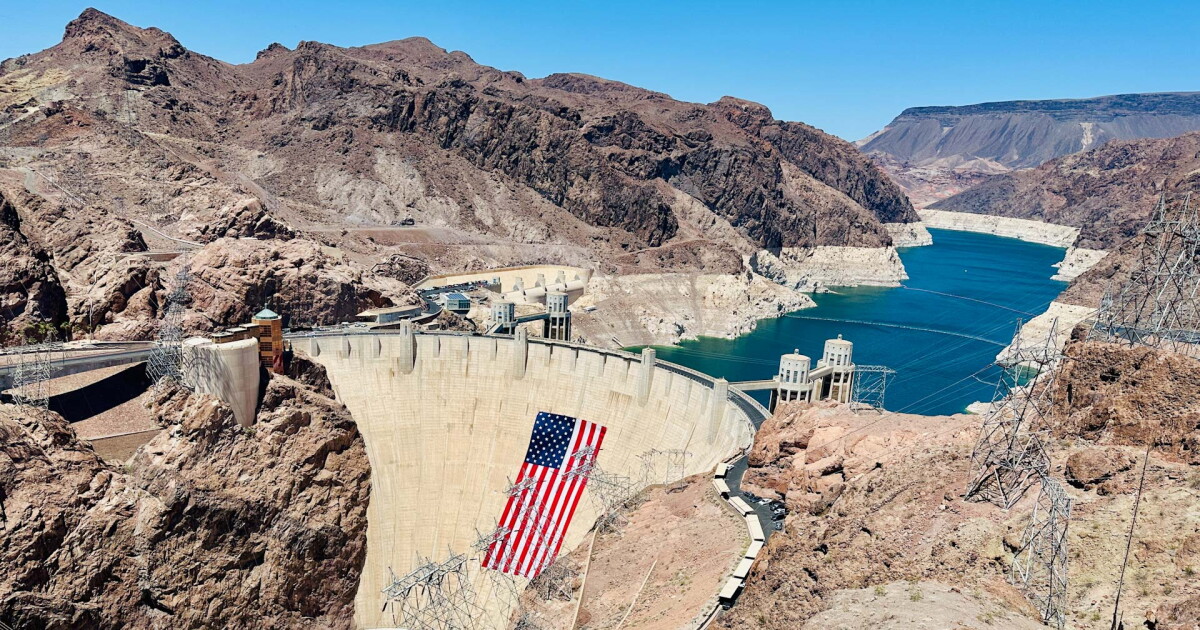
The Bureau of Reclamation’s Final Environmental Impact Statement on the future operation of Lake Mead and Lake Powell marks the next step in the fight over how the states of the Colorado River basin get to divvy up the diminishing water resource.
Processing Content
Years of drought have the river’s two massive reservoirs near critically low water levels, as longstanding agreements that apportion the river’s water to the seven basin states become increasingly hard to sustain.
The river basin not only provides a crucial natural resource needed for drinking water, but it also serves as the backbone for many industries that are crucial to the basin states’ economies.
“These resources are now at significant risk,” the FEIS said. “Since the onset of the current drought in 2000, the Basin’s primary reservoirs, Lake Powell and Lake Mead, have fallen to historically low elevations.”
Federal plans for water allocation detailed
The plan could cut as much as 77% of Arizona’s water deliveries from the river in 2028, “which not only threatens the state’s water-intensive agricultural industry but also much of the state’s population centers,” according to Municipal Market Analytics’ Weekly Outlook report on Aug. 3.
“This FEIS still contains unacceptable options that include the federal government forcing Arizona to take the majority of draconian water cutbacks,” Gov. Katie Hobbs
The FEIS was needed because several major reservoir and water management documents and agreements that guided Colorado River operations through the persistently dry conditions expire this year.
The bureau laid out six different alternatives for water conservation, which would establish guidelines for water deliveries from Lake Mead, coordinate Lake Powell and Lake Mead reservoir operations, manage storage and delivery of conserved system and non-system water and additional activities above Lake Powell.
Out of these plans, the “Preferred Alternative” would create a 10-year decision framework that would remain constant “unless modified through future federal action and appropriate environmental compliance,” according to the FEIS. Interior came up with its preferred alternative because the states could not reach a consensus on long-term guidelines, the document says.
The plan cuts water along lines set in existing treaties, but allows for two-year operating agreements among the states, MMA said.
The decision framework in the FEIS establishes a process that would govern development and issuance of operating guidelines covering anticipated 2-year intervals, “unless consensus-based agreements provide for a longer duration.”
The framework does not create specific operating guidelines; instead, it has a structure in which operating guidelines would be developed and periodically updated through 2036.
“The department has a responsibility to ensure the Colorado River system remains reliable and resilient for the millions of Americans, communities and industries that depend on it,” Interior Secretary Doug Burgum said in
Nevada officials joined Arizona and in expressing aversion to the proposal, saying that they are not getting a sufficient supply of water to meet their needs.
The FEIS “seeks to impose unrealistic reductions on Nevada and our water users,” Gov. Joe Lombardo said separate statement
Both Hobbs and Lombardo said their states submitted proposals that more fairly distributed resources amongst all Basin states than what the Bureau of Reclamation came up with.
“Arizona appears most exposed under the proposed framework because its junior water rights could result in deeper reductions,” S&P Associate Director of U.S. Public Finance Malcolm D’Silva said. “Nevada’s heavy reliance on Colorado River supplies also creates risk, though conservation and water recycling provide some protection.”
California is the third of the Lower Basin states. The Upper Basin states in Colorado River management are Utah, New Mexico, Wyoming and Colorado
“Upper Basin states face fewer direct cutback risks but remain exposed to drought and long-term water availability challenges,” D’Silva said.
The fight for water distribution has been a consistent endeavor for Arizona. In March, the Arizona legislature appropriated $6 million for a Colorado litigation fund in preparation for a
Additionally, Arizona’s Water Infrastructure Finance Authority’s long-term water augmentation fund once again
“Arizona losing 80% of its water will have economic consequences, and the state itself through the Salt River project is planning to tap its own reserves, but that’s a short-term solution,” MMA president and partner Matt Fabian said. “There’s just less water coming in from the river, so it’s going to set off a bunch of investment and new projects in Arizona.”
The Upper Basin governors are more positive about the proposed plan.
“We are encouraged that new operating guidelines will better reflect existing water supply, which must underpin any practicable plan going forward,” the governors of Colorado, Wyoming, Utah, and New Mexico said in
The Upper Basin governors said they still want a long-lasting agreement supported by all seven states.
“States in both the Upper and Lower divisions of the basin are feeling the pain of severe drought,” the Upper Basin state governors said in their release. “This is a reality that all states, and the federal government, will need to address practically, which is why a seven-state agreement will provide the best outcome for all water users in the Colorado River Basin.”
Regardless of reaction, the federal government believed intervention was necessary. The bureau cited the following reasons for drafting the statement: the Secretary of Interior is legally required to coordinate operations of Colorado River reservoirs, the current guidelines — established in 2007 — are expiring, the previous guidelines were insufficient in their regulatory and risk reduction duties, there is an imbalance between water supply and demand and tribal concerns regarding the Basin’s water management need to be addressed, according to the FEIS.
For now, the preferred alternative stated in the FEIS will be the current course of action; however, continued collaboration and input from Basin states will continue to help steer allocation plans over the next decade.
“The Final EIS raises the stakes for long-term water planning, but we expect limited near-term credit pressure for most utilities,” D’Silva said. “Strong water storage, established conservation programs, and solid financial flexibility should help many issuers manage the initial impacts. Over time, credit quality will depend on how effectively utilities secure alternative supplies while keeping rates affordable.”