Another debt extension for Brightline Florida


Brightline Florida
Brightline Florida bondholders have agreed to yet another short-term debt extension while the train line continues to negotiate a debt restructuring.
Processing Content
The struggling company has until the end of the week to make the payments, negotiate another extension, or reach a comprehensive restructuring deal. The latest delay follows a
The brief payment postponement was granted by holders of the $1.2 billion of unrated, or AAFOH, tax-exempt bonds and $985 million of “commuter” bonds, which are linked to a separate project that would establish commuter rail rights for three Florida counties.
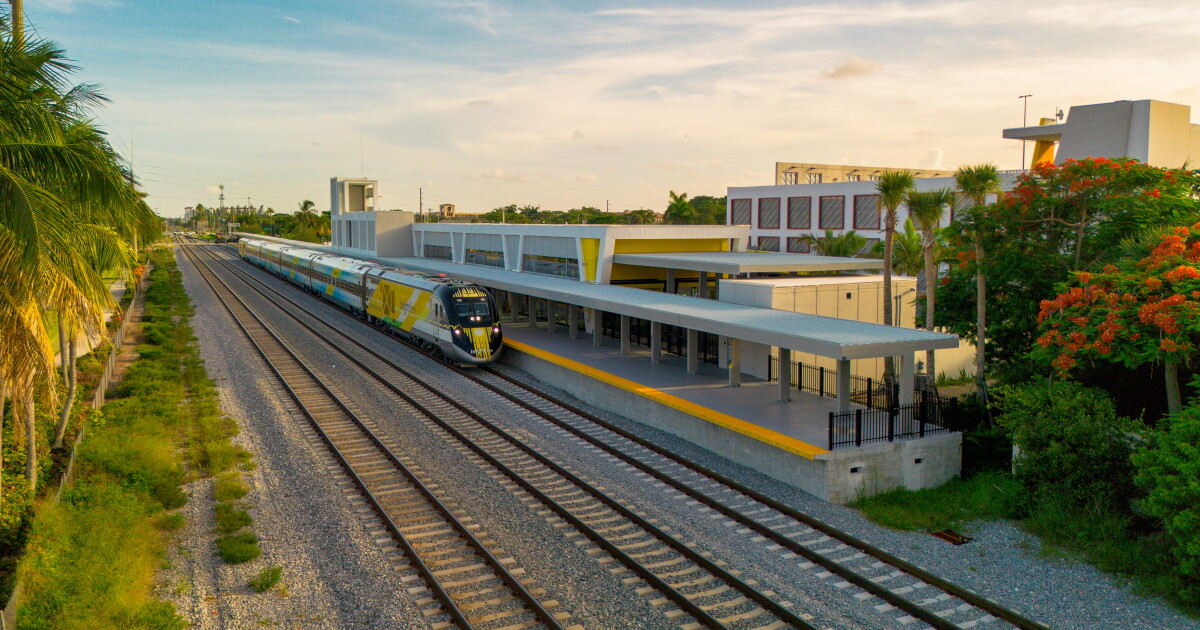
The Fortress Investment Group-backed company operates a 235-mile train in Florida that’s the nation’s only privately owned intercity rail line. Saddled with $5.5 billion of debt and revenue performing under projections, Brightline has spent the last year trying to raise new financing.
A
It’s the fifth supplement for the AAFOH bonds and the 14th supplement to the commuter indenture.
First Eagle, Nuveen, Invesco, BlackRock and Macquarie are among the largest Florida muni holders.
Brightline has an additional $2.2 billion of senior tax-exempt municipal bonds, 51% of which are insured by Assured Guaranty Ltd., and $1.1 billion of subordinate taxable corporate notes held by a group of hedge funds.
The Assured-controlled senior group and the hedge funds are jockeying for control of the project to avoid a court restructuring or bankruptcy, according to Bloomberg.
“I see this happen all the time — someone else has to come in but won’t unless they can prime the others,” said Florida-based attorney Ivan Reich, who leads the bankruptcy, insolvency and restructuring practice group at Nason Yeager. Reich is not involved in the Brightline restructuring.
“Nobody can force anybody to move their positions up and down, but a bankruptcy judge can,” Reich said. “It behooves everybody to get something consensual.”
A key question for lenders is whether they’re better off with the train as an operating system.
“Most bankruptcies are just basically setting up a sale; there are very few true traditional reorganizations out there,” he said.
“But this seems like the type of project that makes more sense to survive than not to survive,” added Reich, who is a regular Brightline commuter. “There are too many constituencies who would be negatively impacted by [the train shutting down].”